Italiano
 English
Shopping Cart
There are no more items in your cart
Available

The Mozia Salt Pans are one of the most iconic landscapes in western Sicily: shimmering salt ponds, traditional windmills, the islets of the Stagnone lagoon, and sunsets that set the horizon on fire. In this practical guide you will discover how to visit the Mozia Salt Pans, how to reach the Phoenician island, what to see, the best time to go (flamingos, “pink” salt pans, seasons), what to wear, and how to combine the experience with an authentic tour at the Culcasi Salt Pans in Trapani to experience the centuries-old tradition of sea salt production up close.
The Mozia Salt Pans are part of the Stagnone Nature Reserve of Marsala, a vast coastal lagoon with shallow waters and small islands (San Pantaleo/Mozia, Santa Maria, Isola Grande). The combination of saline ecosystems, coastal winds, and clay soil has favored salt cultivation for centuries. The island of Mozia, once a Phoenician colony, still preserves walls, necropolises, and artifacts housed in the Whitaker Museum: a rare blend of salt pan landscape and Mediterranean archaeology.
To reach Mozia you take a shuttle boat from the Marsala coast (Contrada Spagnola), sailing among salt ponds and channels in just 10–15 minutes. The crossing is short but scenic: shimmering reflections on the water, white salt mounds, and — with a bit of luck — migratory birds along the basins.
Local tip: if you are staying in Trapani or exploring the coast, consider combining your day with a visit to the Culcasi Salt Pans: in less than an hour’s drive you can experience both “temples of salt.”
Once you land, you can walk on foot along the island’s trails and through the ancient salt ponds. It’s a “slow” experience: the beauty lies in pausing to admire the windmills, follow the canals, and listen to the sea breeze. For a complete overview:
The museum showcases the Phoenician history of the island with artifacts, ceramics, and statues. The archaeological walk includes walls, necropolises, and ancient districts, testimony of Mozia’s central role in salt trade and Mediterranean commerce.
The windmills, symbols of the landscape, were once used to pump water between basins of different salinity. Today they are iconic photo subjects: clean lines, blades, and wide horizons. At golden hour they become perfect silhouettes.
In summer, with strong sunlight, some ponds turn pinkish thanks to microalgae (such as Dunaliella salina) and tiny crustaceans. The phenomenon varies depending on area and season: look for it around midday when the light is strongest.
Shallow waters and steady winds have made the Stagnone a paradise for kitesurfing and windsurfing. Even if you don’t practice, watching the sails “flying” over the salt flats is part of the experience.
The best period is from April to October. Summer offers cinematic sunsets; spring and autumn provide milder temperatures and fewer crowds.
Practical tip: arrive in the early afternoon, visit the museum and trails, then stay until sunset for the best colors.
A frequent question: what should I wear to visit the salt pans? Here’s a handy checklist to enjoy your day worry-free:
A classic question: which salt pans should I visit? The two experiences are complementary:
Our tip: if you can, visit both: Mozia for the natural-archaeological story, Culcasi Salt Pans for the living culture and the thrill of the sunset “from inside” the salt flats.
At the Culcasi Salt Pans in Trapani, the tradition of salt is still a family story. Guided tours take you among channels, dikes and ponds, explaining the salt cycle, ancient tools, and modern changes. At sunset, the low light makes the salt crystals glow: a perfect moment for photos and stories.
Boarding for Mozia is along the Stagnone coast (Contrada Spagnola, Marsala). Boats shuttle to the island in 10–15 minutes. Arrive a little early, especially at sunset in high season.
Allow 2–3 hours for the museum and trails. Stay until golden hour if you want to capture the sunset.
Flamingos are most often seen in late summer and early autumn. The pink shades appear in summer with strong evaporation (microalgae and high salinity).
Closed, comfortable shoes, hat, sunglasses, water, and sunscreen. In spring/autumn bring a windbreaker for the breeze.
You can swim only in permitted areas and never in the salt ponds, which are production sites and delicate habitats.
Mozia: lagoon scenery and Phoenician archaeology. Trapani (Culcasi Salt Pans): living tradition and experiential tours. If you have time, choose both.
Shuttle boat round trips vary depending on company and season; bring cash. The island museum has a separate ticket. Always check locally or on official channels before leaving.
The Mozia Salt Pans are a place to be enjoyed slowly: walking among the ponds, crossing the small bridges, watching the wind turn the blades of the windmills. If you love nature, history, and photography, this is a must-see in western Sicily.
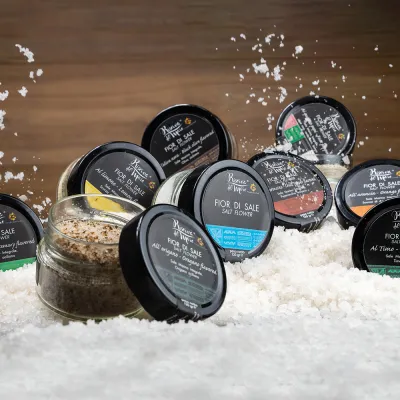
To complete your journey into the culture of salt, come and visit us at the Culcasi Salt Pans: guided tours, family stories, and a sunset you will never forget. Book your visit now and take home the taste of the territory with our Flavoured Fleur de Sel, integral cooking salt, bath salts, and EVO oil and Nubia Red Garlic.