Italiano
 English
Shopping Cart
There are no more items in your cart
Available
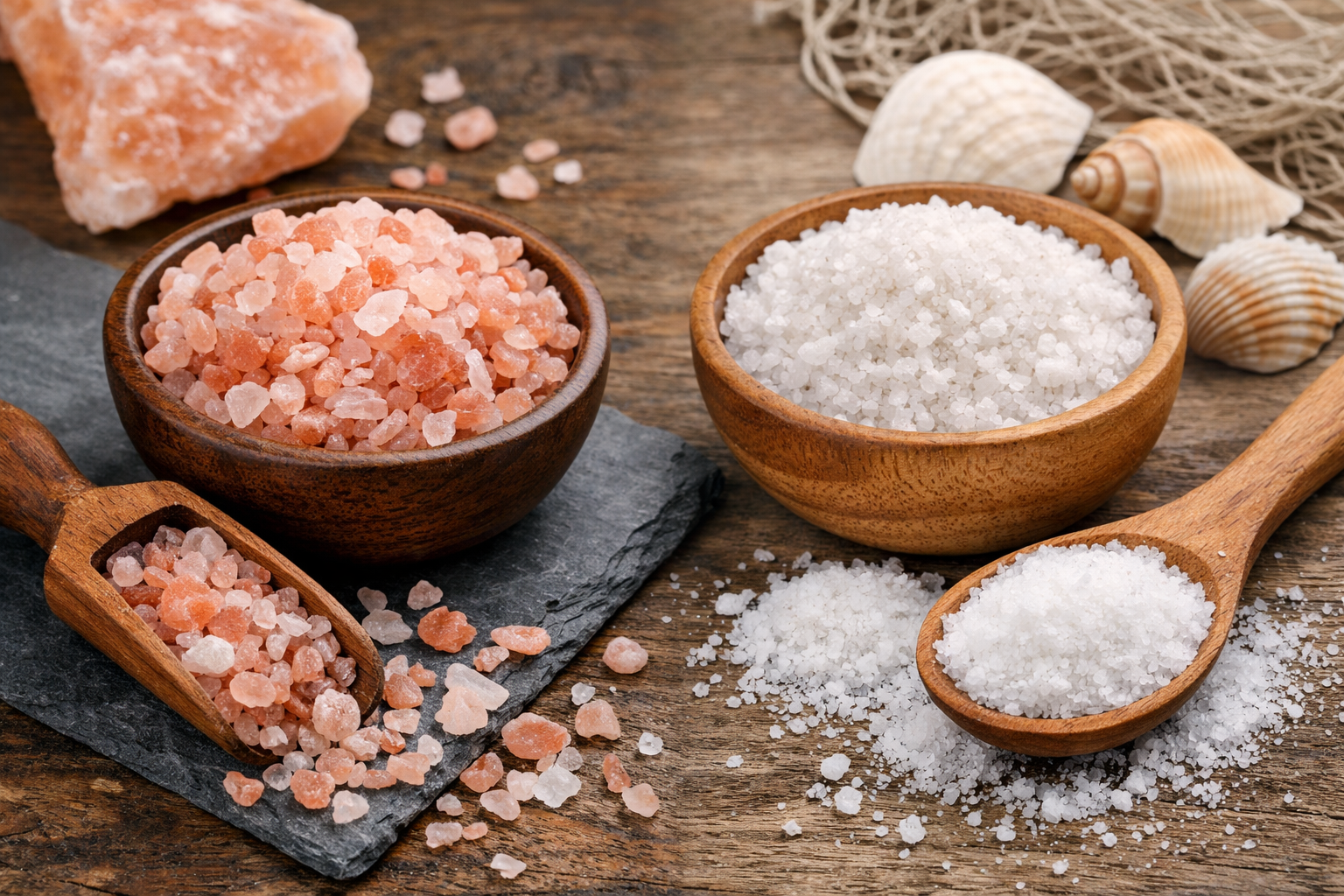
In recent years, Himalayan pink salt has become one of the most talked-about ingredients in kitchens around the world. Its distinctive pink color, exotic origin and mineral-rich reputation have helped make it instantly recognizable.
Alongside it, however, there is another type of salt with a long culinary history and deep Mediterranean roots: unrefined sea salt. Understanding the differences between Himalayan pink salt and unrefined sea salt is not about choosing a winner, but about making more informed choices in everyday cooking.
Himalayan pink salt is a rock salt extracted from mines located in the Punjab region of Pakistan, near the Himalayan mountain range. It is a fossil salt, formed millions of years ago through the evaporation of ancient seas.
Its characteristic pink hue comes from naturally occurring trace minerals such as iron, potassium and magnesium. Himalayan pink salt is generally unrefined and free from additives, and it is commonly sold in coarse crystals or ground form.
Over time, it has gained popularity not only in cooking, but also for alternative uses such as decorative lamps, cooking slabs and relaxing salt baths.
Unrefined sea salt comes directly from the sea. It is obtained through the natural evaporation of seawater, driven by sun and wind, without intensive refining processes. This allows the salt to retain a more natural structure and a richer aromatic profile.
In Sicily, particularly in the Trapani area, sea salt has been part of local food culture for centuries. If you would like to learn more about the connection between salt, territory and tradition, you can explore the story and heritage of Saline Culcasi.
The most evident difference lies in their origin:
This distinction influences not only appearance, but also the cultural and culinary identity of each salt.
Both salts are primarily composed of sodium chloride and contain trace minerals. In normal culinary use, however, the nutritional differences are generally minimal.
The choice often comes down to the quality of the production process and personal preference rather than measurable nutritional advantages.
Himalayan pink salt is known for its mild, rounded saltiness and is often appreciated on simple dishes or raw preparations.
Unrefined sea salt offers a fuller, more balanced flavor that integrates well into everyday cooking. It tends to dissolve evenly and enhance ingredients without overpowering them.
For this reason, it is widely used in Mediterranean cuisine, particularly with vegetables, pasta, fish and bread-making.
Without diminishing the appeal of Himalayan pink salt, unrefined sea salt stands out for its versatility. It is designed for daily use and fits naturally into a wide range of recipes.
Within the selection of Saline Culcasi products, sea salt represents an essential approach to cooking: simple, authentic and deeply connected to its place of origin.
The answer depends on how you plan to use it.
Himalayan pink salt can be an interesting choice for finishing dishes or adding visual appeal. Unrefined sea salt, on the other hand, is ideal for those looking for a natural, reliable salt for everyday cooking.
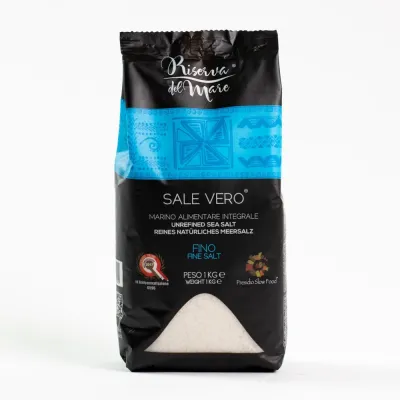
A fine-grain option such as artisanal unrefined sea salt is particularly practical for consistent seasoning.
Many cooks simply choose to keep both: one for variety, the other as a daily staple.
Food today is often influenced by trends and visual appeal, which partly explains the popularity of Himalayan pink salt.
Rediscovering unrefined sea salt means reconnecting with a more grounded approach to cooking—one based on essential ingredients, natural processes and long-standing traditions.
It is not about which salt is better, but which one best reflects your way of cooking.
The comparison between Himalayan pink salt and unrefined sea salt is not a competition, but an opportunity to better understand what we bring to the table.
Himalayan pink salt fascinates with its color and distant journey. Unrefined sea salt wins people over with its simplicity, balance and deep connection to the sea.
Sometimes, the most authentic choice is not the one that travels the farthest, but the one shaped by sun, wind and sea over centuries.