Italiano
 English
Shopping Cart
There are no more items in your cart
A bar of soap can be a simple part of a daily routine, but ingredients, fragrance and production methods vary from one formula to another. Knowing what to look for can help you choose more thoughtfully and use a product in a way that suits your habits. This guide explains what the term handmade soap means, how to read product information and how to store a bar properly. It also introduces the Saline Culcasi soap, inspired by the ingredients and landscape of the salt pans.
What does “handmade soap” mean?
“Handmade” mainly describes how a product is made. Production methods and batch sizes may differ from those used in large-scale manufacturing, but the word alone does not define a particular formula or guarantee that a product suits every skin type. To understand what you are buying, check the ingredient list, directions for use and the specific claims made by the producer.
The term natural soap can also be used in different ways. It does not replace reading the label: ingredients, origin and intended use should be assessed for each product. A solid bar may contain oils and fragrance materials, as well as the ingredients needed for saponification. A clear product description is a useful starting point when comparing options.
How soap is made: saponification
Soap is made through a reaction called saponification, in which fats or oils react with an alkaline substance. In the cold-process method, the ingredients are worked without a prolonged cooking stage for the soap mixture; the bar is then left to mature according to the recipe. The raw materials and production method influence the final characteristics, including texture, lather and fragrance.
Sodium hydroxide is used to make many traditional solid soaps because it enables oils to saponify. Its presence in an INCI list should be understood in the context of the finished product and its manufacturing process: one ingredient alone is not enough to judge a formula’s quality or safety. For specific questions, consult the producer’s information and follow the warnings on the product.
The production method alone does not tell you whether a soap is “better” for everyone. A considered choice takes into account the formula, intended use, fragrance and your own experience. If your skin is particularly reactive or you have a dermatological concern, advice from a qualified professional may be more useful than broad claims that apply to everyone.
How to choose a solid soap
Read the ingredients and directions
Check the INCI list and the information provided by the producer. Look for the ingredients that define the formula, whether it is fragranced and which areas it is intended for. For example, a product described for hands and body should not automatically be treated as a facial cleanser: facial skin may have different needs, and tolerance varies from person to person.
Consider fragrance and individual sensitivities
Fragrance is part of the user experience, but it does not indicate how effective a soap is. Essential oils and aromatic ingredients may not suit everyone. If you know you are sensitive to certain ingredients, read the INCI list carefully and follow the product warnings. If irritation occurs, stop using the product and seek advice from a healthcare professional.
Choose for the way you plan to use it
A bar for everyday hand washing may be convenient by the sink; one kept in the shower may suit body cleansing. Consider who will use it and where it will be stored. A solid format is practical for travel or a gym bag, provided the bar can dry properly between uses.
Is natural soap always gentler?
Not necessarily. “Natural” and “handmade” are not automatic synonyms for gentle, just as “industrial” does not automatically mean harsh. The feel of a product depends on its overall formula, how it is used and individual skin characteristics. Assess the product based on what it contains, what it is intended for and how your skin tolerates it, rather than relying on a broad label alone.
For facial cleansing, choose a product specifically intended for that use and follow its directions. A soap for hands and body should not be presented as a treatment for acne, eczema or other conditions: a cleansing cosmetic is for cleansing and does not replace advice from a dermatologist.
How to use and store a bar of soap
Wet the bar and work it between your hands or over wet skin, massaging gently. Rinse thoroughly. Avoid scrubbing hard and take care to keep the product out of your eyes; if contact occurs, rinse with water. Always follow the specific directions on the package or product page.
After use, leave the bar on a soap dish with holes or grooves that allow water to drain. If it sits in water, it may soften and wear away more quickly. Store it in a cool, dry place. When travelling, use a container that allows the bar to dry between uses.
Acqua Madre, Trapani sea salt and lemon: the Saline Culcasi formula
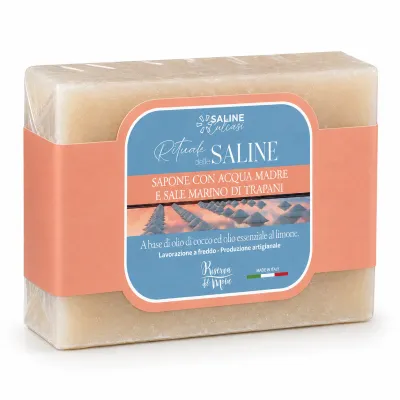
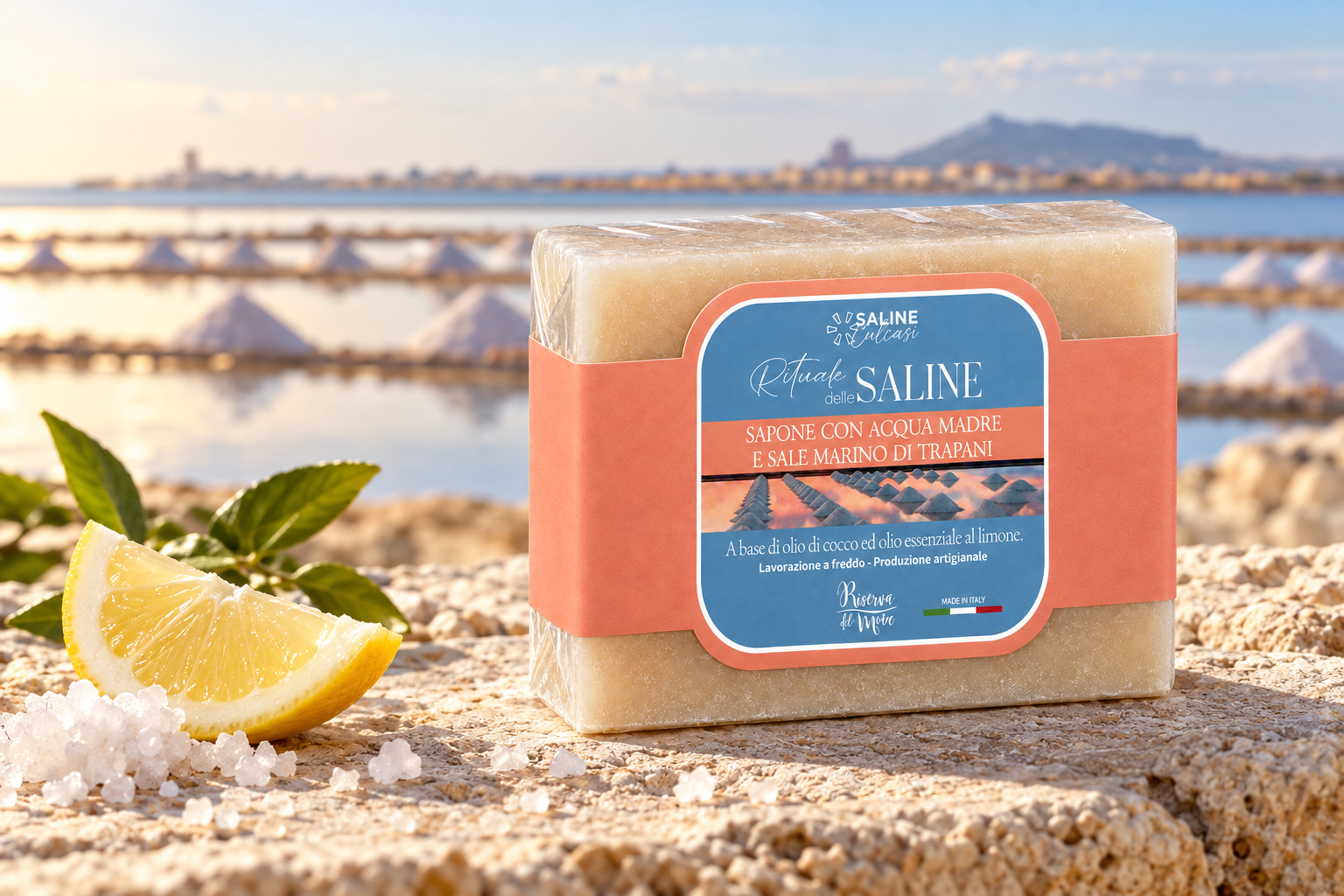
Rituale delle Saline is a 100 g artisanal solid soap made using the cold-process method. Its formula brings together coconut oil, Acqua Madre and whole sea salt from the Saline Culcasi salt pans, with lemon essential oil for a citrus note. It is intended for cleansing hands and body, bringing the ingredients and landscape of the salt pans into an everyday routine.
Acqua Madre is connected to the sea-salt production cycle; its use in the formula reflects the product’s link with the salt pans. Whole sea salt from Trapani reinforces that local connection, while coconut oil is the oil base used in saponification. Lemon essential oil completes the fragrance profile. These details describe the ingredients and identity of the product; they are not promises of dermatological results.
To use it, wet the bar, massage it over wet skin until it lathers, and rinse. The product page describes it for hands and body. If you are looking for a facial cleanser or know that you are sensitive to fragranced ingredients, check the full formula first. Discover the soap with Acqua Madre and Trapani sea salt.
Frequently asked questions about handmade soap
What makes a soap handmade?
The term refers to the production method and scale described by the producer. To understand the formula and intended use, always check the ingredients and directions for the individual product.
Why choose a solid soap?
A solid bar is compact, easy to carry and simple to use. How long it lasts depends on how often it is used and how it is stored. Letting it dry between uses can help prevent it from wearing away too quickly.
Can handmade soap be used on the face?
That depends on the formula and the product directions. If a soap is intended for hands and body, do not assume it is suitable for facial use. For specific skin concerns, ask a dermatologist.
How should I store a bar of soap?
Place it on a draining soap dish and let it dry between uses. Avoid leaving it in standing water or putting it in a closed container while it is still wet.
An everyday ritual connected to place
Choosing a soap means considering its formula, fragrance, intended use and practicality. A handmade product can add a story of ingredients and craft to this everyday gesture, as long as its features are understood without attributing claims that have not been made. Rituale delle Saline combines cold-process saponification with the story of Acqua Madre and Trapani sea salt, finished with a fresh lemon note.
If you would like to add it to your routine, visit the soap product page for ingredients, directions and warnings. You can also browse the Bath Salts and other body-care products in the Saline Culcasi shop.